Hidden reuse
A shared block or embedded procedure can affect several publications even when its filename never changes.
Engineering change impact
TwinWorks shows where explicitly referenced parts, tools, sources, and procedures are used. Documentation teams can scope the review, prepare changes, and keep authorized experts in control of the approved revision.
Start with one changed identifier and one real manual or procedure set. No generic sales presentation.
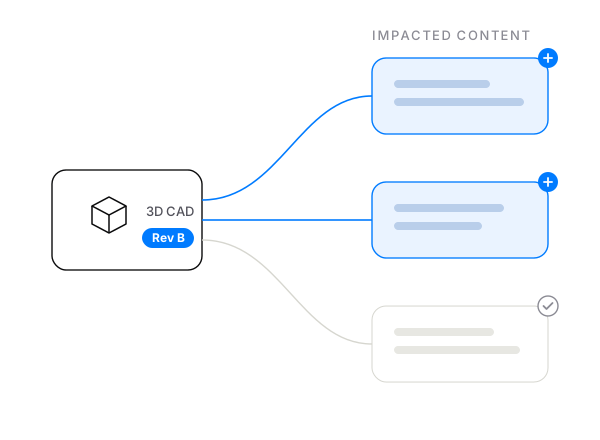
The documentation blast radius
A changed component can appear in a maintenance step, a tool list, a safety note, a training module, and an embedded procedure. Email and folder search find words; they do not reliably show how controlled content is related.
A shared block or embedded procedure can affect several publications even when its filename never changes.
Deleted, unpublished, or changed source material can leave a document pointing at stale or missing content.
A detected impact is not an approved correction. The responsible expert still needs to judge technical meaning.
A controlled workflow
The current product evidence supports semantic where-used and conflict analysis. It does not support pretending that an arbitrary CAD upload can rewrite every downstream document autonomously.
Expert control
TwinWorks can narrow the review surface. It cannot decide whether a changed torque, warning, sequence, or configuration is safe. The accountable expert remains the decision-maker.
Assistant suggestions can be applied or dismissed. Reviewers can anchor comments, request changes, endorse, reject, or approve. Approval materializes a new revision.
A useful first evaluation
Use a closed engineering change with a known documentation outcome. That gives both sides a factual way to test coverage, false positives, review effort, and the path to an approved publication.
A changed identifier, its source context, and the manuals or procedures your team knows were affected.
Discovery time, known-impact coverage, irrelevant hits, review effort, and approval handoffs.
Whether explicit relationship coverage is strong enough for the next product family or publication set.
Continue the evaluation
It is the process of finding manuals, modules, blocks, and procedures that reference a changed product source, part, tool, consumable, or embedded procedure, then deciding which content needs review.
No. TwinWorks can identify affected content and prepare suggestions. Reviewers comment, request changes, endorse, reject, or approve; an authorized approver creates the approved revision.
The current verified workflow is relationship-based. It shows where explicitly referenced parts, tools, sources, and procedures are used. A universal CAD-revision-to-documentation blast-radius workflow is not a current public claim.
Choose one closed product change whose documentation impact your team already knows. Compare known-impact coverage, irrelevant hits, review time, and the approval path.
Bring a known change and the documents it affected. We will map the relationships, show the current product boundary, and define a credible pilot.